Introduction Almost all industries are growing their roots in Artificial Intelligence today. From drafting judgements…
Generative AI and Music Piracy in India: Trends, Schemes and Legal Response
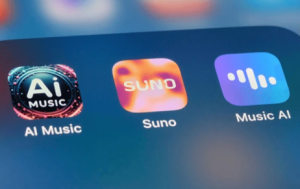
The ability of generative AI (GenAI) tools to produce new songs and mimic voices with astonishing realism has increased the risk of fraud and piracy. Actors can use AI in music to create unapproved songs by either imitating the voices of well-known singers or replicating already-existing copyrighted works. For instance, a singer’s voice can now be “up to 95%” accurately cloned from a few seconds of audio[1]. In order to steal royalties, scammers have taken advantage of this by creating phoney songs that appear to be by well-known musicians or overloading streaming services with AI-generated music. These schemes include the creation of numerous bot-driven streams of AI songs under false band names or the sale of “pre-release” tracks (as if leaked from labels) that turn out to be AI-generated[2].
India is severely affected by these challenges. Unauthorised cloning of well-known Bollywood voices has led to legal action. Superstar singer Arijit Singh filed a lawsuit in Arijit Singh v. Codible Ventures LLP (Bombay HC, 2024) after the defendants provided an AI tool that could change any voice into Singh’s voice (via a website filme.imyfone.com)[3]. Singh’s “name, voice, image, likeness, persona, and other traits” are protected personality rights, according to the Bombay High Court, which granted relief. Celebrities are “vulnerable to being targeted by unauthorised generative AI content,” the court cautioned, due to new AI tools. This case highlights the legal protection of an artist’s voice and vocal style and is the first in India to address GenAI abuse in music.
Another example from India is the formal protest by the family of the late singer S.P. Balasubrahmanyam against the unapproved use of AI to recreate his voice for a Tamil film song[4]. (Music composer A.R. Rahman used two deceased singers’ AI-generated voices, igniting a copyright and ethics controversy.) These disputes demonstrate that existing provisions and related rights can apply even though AI is not specifically mentioned in India’s Copyright Act 1957. The Act, which was amended in 2012 to give performers (such as singers) rights and royalties, grants exclusive reproduction and performance rights in sound recordings (Sections 14(e)(1)). Therefore, it may violate the rights of the recording’s owner to produce or distribute an unapproved new recording, even if it is produced by AI. Furthermore, an artist’s name, image, or voice are protected from unapproved commercial use by Section 57 (Author’s special rights) and common-law “personality” or publicity rights (recognised in cases like Amitabh Bachchan v. Rajat Nagi and Arijit Singh).
Legal Framework in India
Even though not a single law refers to AI in any of them, there are a number of laws that concern AI music piracy in India. The copyright act 1957 is the main law that give the copyright holder (i.e., music labels, composers, lyricists and recording companies) the exclusive right to reproduce, distribute and communicate their works. In Section 51, any infringement is the unauthorized copying of any copyrighted composition or recording. In the event that an AI device copies a melody, lyrics or instrumental piece of a registered song without authorization, the output most probably violates the composition and/or recording of sounds protection. (One such example of this is when Universal Music was able to have an AI-generated track of a so-called ghost Drake take down, as it contained a sample of a metro Boomin recording under copyright[5].) Even in a situation where the output of AI is entirely novel, when a model has been trained on licensed music without the rights-holders being consulted, they claim it infringes their rights to data-mining and reproduction.
Section 38A and 38B provides performer rights of performers (singers and musicians). These allow the right to control and make royalties in any utilization of their recorded performances. In this way, in case, a studio or an AI engineer comes up with a new recording, but it duplicates the performance of a singer, the rights of the latter may be involved. Section 57, morally, gives the right of attribution and integrity to the work done by authors (including the songwriters and the movie directors), but this is less directly related to voice cloning.
India knows personality/publicity right by case law as well. The voice of a celebrity is safeguarded by the courts as an extension of his persona as witnessed in Arijit Singh. In other cases (Amitabh Bachchan, Anil Kapoor, Karan Johar), the unauthorized commercial use of the name, voice or image of a public figure has been held to pass by misappropriation. Analogically, a track composed by AI under the name of a well-known artist (or imitating his/her style) might be alleged on those premises.
It can also be referred to the Information Technology Act, 2000. As an illustration, the digital frauds based on AI (impersonation, deceit of the masses and suchlike) could invoke the parts on cyber fraud (Sections 66C, 66D identity theft, cheating by impersonation) or on publishing obscene/defamatory content (Section 67, etc.) should it be applicable. The application of AI to the cyber law of India has not been explicitly evaluated yet, though the relevance of the law to AI-specific content has been recognized by the government: the 2023 AI guidelines explicitly state that AI developers must adhere to all existing Indian laws (such as copyright and IT laws)[6].
Government latest policy
“Central Government on 17 December 2025 reviewed the adequacy of the Copyright Act, 1957 to address legal challenges arising from the use of generative artificial intelligence (AI)”[7]. A thorough legislative framework to regulate the advancement and application of AI in India is proposed in the Artificial Intelligence (Ethics and Accountability) Bill, 2025, which MP Bharti Pardhi introduced in the Lok Sabha. Fundamentally, the Bill aims to create a central Ethics Committee for Artificial Intelligence, a multidisciplinary organisation responsible for developing moral standards, checking algorithms for bias, and supervising the application of AI in delicate industries like finance, hiring, and law enforcement. In order to prevent discrimination based on race, religion, or gender, the legislation places a strong emphasis on transparency, requiring developers to reveal their data sources and methodologies and requiring frequent audits.
The Bill establishes a penalty system with fines of up to 5 crore, licence suspension, and possible criminal liability for repeat offenders in order to ensure strict compliance. It specifically targets unapproved AI-based surveillance and mandates that any such deployment be approved beforehand by the Ethics Committee. The Bill seeks to promote a balanced ecosystem where technological innovation is in line with human rights and democratic values by enabling citizens to file complaints against AI misuse and enforcing strict transparency standards[8].
Indian Case law
- Arijit Singh V Codible Ventures LLP (IPR SUIT(L) NO. 23443 OF 2024)[9]
Bollywood singer Arijit Singh’s personality rights were abused, and this case gives us insight how the Bombay High Court addressed this issue. The defendants were charged with selling goods bearing his name and image without permission and using artificial intelligence (AI) tools to mimic his voice. According to Section 38-B of the Copyright Act of 1957, the court determined that such acts violated his moral rights, publicity, and personality. It underlined that celebrities have sole authority over the commercial use of their identities and that using AI to imitate a celebrity’s voice without authorisation is a grave violation of their right to privacy and dignity, which is protected by Article 21 of the Constitution. The ruling upholds the principles established in R. Rajagopal v. State of Tamil Nadu and Karan Johar v. Indian Pride Advisory Pvt. Ltd., which acknowledge the right to shield one’s identity from exploitation.
The court also noted that since endorsements and image licensing are important revenue streams, such unapproved use directly affects a celebrity’s livelihood. Citing Anil Kapoor v. Simply Life India, it was decided that unapproved replication or commercial exploitation of a celebrity’s persona damages their reputation and career opportunities and permits others to profit unfairly. The court stated that although it recognises the right to free speech, it does not cover the commercial exploitation of a public figure’s identity. As a result, the court granted Arijit Singh a dynamic ad-interim injunction, establishing a solid precedent for protecting celebrity rights in the digital and AI Driven era.
- Sadhguru Jagadish Vasudev & Anr v Igor Isakov & Ors (CS(COMM) 578/2025)[10]
The abuse of Sadhguru’s personality rights in the digital sphere was addressed by the Delhi High Court. Sadhguru and the Isha Foundation filed a lawsuit against several defendants who exploited Sadhguru’s name, image, and voice for profit by producing deepfakes and deceptive content using AI tools and digital platforms. The plaintiffs requested injunctions and damages, claiming that these acts seriously harmed his goodwill and reputation. Based on Yamini Manohar v. T.K.D. Krithi (2024) and Chandra Kishore Chaurasia v. R. A. Perfumery Works Pvt. Ltd. (2022), the Court also granted an exemption from pre-litigation mediation under Section 12A of the Commercial Courts Act, taking into account the severity and urgency of the infringement.
The Court acknowledged the international fame of Sadhguru and believed that the production and distribution of false material by the accused should be regarded as an illegal exploitation of his image. Taking into account that online platforms are viral and the harm that can be caused by such misuse can be significant, the Court issued injunctions against the infringement of Sadhguru by name, likeness, or voice without prior written consent, as well as ordered the service providers to suspend accounts and websites that violate the order. This decision contributes to the emerging judicial acceptance of personality rights in the digital era of AI-generated content, which may create a powerful precedent of safeguarding reputational interest and spiritual personalities in the digital era.
- Jaikishan Kakubhai Saraf (Jackie Shroff.) vs. The Peppy Store & Ors[11].
An ex parte interim order granted by the Delhi High Court safeguarding the personality and publicity rights of Jackie Shroff, barred different e-commerce platforms, social media accounts, and an AI chatbot using his name, image, voice, likeness and the registered mark BHIDU without permission. Shroff held that his personality and trademarks had been used commercially as unlicensed merchandise, posters, wallpapers, derogatory or distorted videos and an AI chatbot emulating his persona, violating his personality/publicity rights, copyright act morals rights and common law rights of passing off and unfair competition. His status as a celebrity was accepted by the court and it was found that such unauthorized purposes amounted to false endorsement and brought unfair commercial profits and thus ad-interim injunctions and orders to prevent infringing links and material were allowed.
Simultaneously, the court has given a close consideration to these rights in comparison to the freedom of speech, especially a YouTube version of thug life edit, noting that meme, spoof, and parody materials are a valid means of expression and a valuable source of revenue to the creators of such material on the Internet. Although it stayed to a refusal injunction of allegedly non-derogatory meme, at this point, the court enjoined defendants who had made defamatory or pornographic content or sold commercially on the persona of Shroff, such as an AI chatbot that mimicked Shroff without his permission. The order is also noteworthy in supporting both the protection against AI-driven abuse of celebrity features and the constitutional importance of online satire and creator economies, and follows on the precedents of other previous Delhi High Court rulings like Amitabh Bachchan v. Rajat Nagi and Anil Kapoor v. Simply life India and ors. on celebrity personality rights in the era of AI.
Conclusion
To sum up, the regulatory reaction of Indian law to the fast rise and spread of Generative Artificial Intelligence evidences the versatility of the existing legal system as well as the increasing understanding of the necessity of a specific AI regulation mechanism. The court verdicts in Arijit Singh v. Codabile Ventures LLP, Sadhguru Jagadish Vasudev and Anr v. Igor Isakov and Ors, versus Jaikishan Kakubhai Saraf (Jackie Shroff). All three sources by the Peppy Store and Ors. collectively highlight the fact that the courts have started to apply and interpret classical principles of law, including copyright, personality rights, and unfair competition, to litigation concerning algorithmically-generated content and business algorithms. These examples demonstrate the changing practice of jurisprudence that tries to create a balance between innovative technological advancement and preservation of the traditional legal rights despite the lack of legislation directly related to AI.
Simultaneously, the policy change in terms of formalising ethical guardrails and accountability arrangements surrounding the AI systems is manifested in legislative discussions in Parliament, especially the Artificial Intelligence (Ethics and Accountability) Bill, 2025. Introduced by a private member, the Bill suggests a statutory ethics committee, transparency requirements, and substantial penalties (including ₹5 crore fines in the case of misuse), in a definite attempt to curb risks in unauthorised surveillance, discriminatory decision making algorithms and the deployment of AI in an obscure manner.
These legislative efforts coincide with broader policy efforts such as the India AI Governance Guidelines (2025), which focus on accountability and transparency, although currently not legally enforceable, and proposed changes to the current statutory regimes (such as the Information Technology Rules) to address AI-generated content and misinformation. As a whole, these court tendencies and legislative initiatives are indicative of a paradigm transition: not using only traditional legal doctrines but a hybrid regulatory framework that will incorporate not just case law and techno-legal policy prescriptions but also future statutory norms.
But the transition has not been complete yet. The courts still seek to resolve interpretive loopholes based on the existing statutes, and lawmakers and regulators are seeking to develop a proactive model of governance that has the potential to encourage innovation and, at the same time, address the special harms of generative AI. With India striking this balance, it is possible to argue that female Indian law is slowly beginning to be more adequately placed to handle the challenges and opportunities posed by Gen AI, as judicial pronouncements and new legislative frameworks interact, indicating that the Indian law will increasingly be better placed to handle the dilemmas and opportunities presented by Gen AI without compromising on responsibility, transparency, or fundamental rights.
Author: Sarthak Gupta, in case of any queries please contact/write back to us via email to [email protected] or at IIPRD.
[1] Ai Voice Cloning: How a Bollywood veteran set a legal precedent (no date) WIPO. Available at: https://www.wipo.int/en/web/wipo-magazine/articles/ai-voice-cloning-how-a-bollywood-veteran-set-a-legal-precedent-73631#:~:text=,up%20to%2095%20percent%20accuracy.
[2] Cooke, C. (2023) Generative AI being used to create fake pre-release ‘pirate’ tracks, says UMG Content Protection boss, CMU | the music business explained. Available at: https://completemusicupdate.com/generative-ai-being-used-to-create-fake-pre-release-pirate-tracks-says-umg-content-protection-boss/#:~:text=,labels%20through%20hacking%20or%20phishing.
[3] Arijit-Singh-vs-codible-ventures-LLP-552701.PDF. Available at: https://www.livelaw.in/pdf_upload/arijit-singh-vs-codible-ventures-llp-552701.pdf.
[4] Family of SPB challenges use of late singer’s voice Sans Consent. Available at: https://www.medianama.com/2024/02/223-sp-balasubrahmanyam-family-voice-ai-recreation-2/.
[5] Cooke, C. (2023a) Generative AI being used to create fake pre-release ‘pirate’ tracks, says UMG Content Protection boss, CMU | the music business explained. Available at: https://completemusicupdate.com/generative-ai-being-used-to-create-fake-pre-release-pirate-tracks-says-umg-content-protection-boss/#:~:text=Explaining%20how%20Universal%20sought%20to,the%20basis%20of%20copyright%20infringement”.
[6] Meity unveils India’s approach towards regulating artificial intelligence: Article: Chambers and partners (no date) Article | Chambers and Partners. Available at: https://chambers.com/articles/meity-unveils-india-s-approach-towards-regulating-artificial-intelligence.
[7] Thyagarajan, S.N. 17 December 2025, Copyright act being reviewed to address challenges posed by Generative AI: Centre in Lok Sabha, Bar and Bench – Indian Legal news. Available at: https://www.barandbench.com/news/law-policy/copyright-act-being-reviewed-to-address-challenges-posed-by-generative-ai-centre-in-lok-sabha.
[8] Thyagarajan, S.N. (2025) Bill in Parliament proposes penalties of upto ₹5 crore for misuse of AI Systems, Bar and Bench – Indian Legal news. Available at: https://www.barandbench.com/amp/story/news/law-policy/bill-in-parliament-proposes-penalties-of-upto-5-crore-for-misuse-of-ai-systems.
[9] Khan, Mohd.S. (2024) Case study: Arijit Singh v. Codible Ventures LLP, Legal Wires – World leaders in legal education and research. Available at: https://legal-wires.com/case-study/case-study-arijit-singh-v-codible-ventures-llp/.
[10] Delhi HC protects Sadhguru Jagadish Vasudev’s rights (2025) IndiaLaw LLP. Available at: https://www.indialaw.in/blog/intellectual-property-rights/hc-on-sadhguru-jagadish-vasudev/.
[11] Protecting personality rights: Jackie Shroff’s victory against AI and social media infringements | IPRMENTLAW. Available at: https://iprmentlaw.com/2024/06/02/protecting-personality-rights-jackie-shroffs-victory-against-ai-and-social-media-infringements/.
Related Posts