

Fair Use vs. Licensing in Education: Legal Balance for Learning
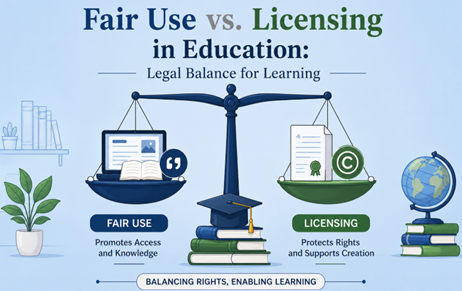
Fair use and licensing represent two distinct pathways for educators and institutions to access copyrighted materials legally, each serving different needs within the educational ecosystem. Fair use offers flexibility for spontaneous classroom activities and transformative scholarship, while licensing provides certainty for systematic reproduction and distribution. This tension shapes everything from lecture slides to online course […]
Franchising as a Form of Trademark Licensing

Franchising represents one of the most sophisticated and widespread applications of trademark licensing in modern business, serving as a powerful mechanism for brand expansion while embedding strict quality controls that go far beyond traditional licensing arrangements. At its core, franchising allows a business owner, known as the franchisor, to grant independent operators, or franchisees, the […]
Global Franchising In F&B: NDAS & Licensing Agreements Across Sea Jurisdictions

INTRODUCTION The term “franchise” originates from the Norman French word “franchise,” which is derived from the French word “frank,” meaning a free man, liberated to engage in employment. The English term “franchise” was originally employed to denote the liberation from any prohibition, permission, or privilege. This term refers to the ability of a company to […]
Open-Source Software Licensing: Complete Guide to Permissions, Compliance, Enforcement

Open-source software licensing forms the backbone of collaborative technology development, enabling thousands of developers worldwide to build, modify, and distribute software freely while balancing innovation with legal protections. Unlike proprietary licenses that restrict usage, open-source licenses grant explicit permissions for copying, modification, and redistribution, fueling ecosystems like Linux, Apache servers, and Android. These licenses vary […]
Resolving Licensing Conflicts: Lessons from Singapore’s IP Mediation Success

Introduction In present times, Intellectual Property (IP) licensing is a key profitable model for plethora of businesses. Through the use of patents, trademarks, copyright and other IP, licensing allows companies to strategize their innovation and reach out to more customers. But licensing deals are not that straight forward. Fights over royalties, performance standards, and the […]
A Critical Evaluation of The Fssai Licensing Structure
In India, the food industry is witnessing rapid growth, thus, food safety compliance should not only be viewed as an exercise in complying with legal obligations but also as a component of long-term sustainable business success. All participants in the food supply chain must fulfil their responsibilities according to the guidelines provided by the Food […]
Brand Licensing Strategies in India’s 2025 Entertainment Sector Amid SEBI’s IP Disclosure Reforms

Introduction: Navigating Growth and Governance in a Dynamic Landscape The Indian entertainment industry, which includes the dominance of cinema in Bollywood and the furious growth of the models of over-the-top (OTT) services, is a fundamental element of economic and cultural development in 2025. Web 3.45 lakh crore with an approximate growth rate of 8.3% in […]
India’s Approach to SEPs and FRAND Licensing: IPR and Antitrust Law Narratives
Introduction The smartphones, laptops, pen drives etc. that we carry, function seamlessly because of certain standards, i.e., certain widely accepted technical rules that ensure interoperability. These standards are often built upon, SEPs or Standard Essential Patents. Standard Essential Patents, simply put, are the standardised and essential patents indispensable for the implementation of a technical standard. […]
IP Rights in Sports: The Hidden Power Behind the Game
Introduction Sports and Intellectual Property may appear to be distinct worlds; however, they meet in a dynamic way. Intellectual Property Rights (IPRs) works as a backbone in the legal structuring and commercialization of the sports industry, not only by branding international sports leagues but also broadcasting rights of certain major tournaments and protecting the image […]
Realigning Intermediary obligations and Licensing clarity in the wake of ANI’s Takedown Campaign

What happens when copyright enforcement becomes a weapon, not a safeguard? In the digital world where content is created, consumed, and critiqued within seconds, the recent copyright strikes by Asian News International (‘ANI’) along with the consequent deletion of several YouTube channels, expose two grey areas in India’s digital media regulation. While fair-dealing, de minimis […]