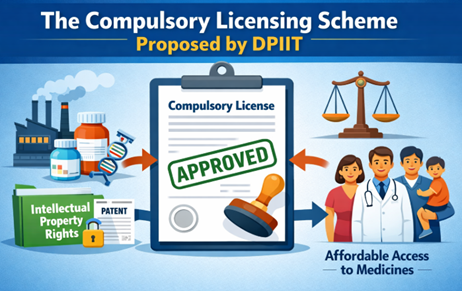
Introduction Intellectual property (IP) is one of the most significant assets in the innovation economy…
Streaming Barriers and Licensing Borders: The Global Legal Struggle Against Geo-Blocking
Introduction
With the digitally networked world of today, streaming has remade content consumption beyond recognition. Platforms like Netflix are globally accessible, but simultaneously sustain territorial limits by the practice of geo-blocking – where user access to content is blocked on a geographical basis. The contradiction indicates deep fault lines between the dream of a borderless internet and the reality of regional licensing. While geo-blocking allows rightsholders to capitalize on content within regional market conditions, simultaneously it unifies the user experience and presents very serious legal and ethical problems. As VPN technology spreads, cross-border e-commerce grows, and requests for content portability increase, the legality and fairness of geo-blocking are being questioned as never before. Consumers call for levelness of access, yet platforms and studios offer exclusivity as a necessity for preserving creative sectors.
This article looks at the complex regulatory and jurisprudential landscape of geo-blocking through a case study of Netflix. In comparing India, the United States, the European Union, and South Korea, it explores the interplay of territorial licensing, consumer protection, and competition law. The discussion also incorporates contemporary policy shifts, such as the EU’s Digital Markets Act, India’s proposed Digital India Bill, and recent scholarship by Giuseppe Mazziotti and Sabrina Earle, to understand the future of digital content governance. It integrates academic insights, including Giuseppe Mazziotti’s critique of the European framework, Sabrina Earle’s consumer rights analysis, and scholarly commentary from the European Parliament’s research service. The blog also addresses recent developments such as European Commission’s Digital Markets Act, Indian draft Digital India Bill, and the U.S. FTC’s increased enforcement.
Legal Framework and Core Issues
India
Indian law does not mention geo blocking. Distribution of copyrighted content by way of licensing is permitted under Sections 14 and 30 of the Copyright Act, 1957. Section 79 of the Information Technology Act, 2000, grants immunity to intermediaries such as Netflix unless they possess actual knowledge of infringement.
Because there are no direct legal prohibitions, platforms rely on terms of service to implement regional restrictions. India’s MeitY published a consultation paper in 2023 on the Digital India Act that requires closer regulation of digital platforms, including transparency regarding algorithmic content determination. Although not targeting geo-blocking per se, these measures could have accountability norms shaping territorial content control.
Consumer law continues to leave streaming discrimination uncovered. Legal arguments against unfair trade practices on the basis of content, however, may find room in the Consumer Protection Act, 2019, if differential access leads to price or value-based discrimination across states.
United States
The U.S. copyright system, based on the Digital Millennium Copyright Act (DMCA) and Title 17 of the U.S. Code, firmly supports the territorial model of licensing. Geo-blocking is not an infringement of copyright law but rather the application of contractually exclusive zones of distribution.
Nonetheless, antitrust laws like the Sherman Act and Federal Trade Commission Act have come to be employed more and more to examine market segmentation. The U.S. v. Apple Inc. case, although an e-book case, is pertinent in identifying the ways digital platforms can be held liable for restrictive trade practices. Recent guidelines of the FTC (2023) also point to growing monitoring of digital platforms’ market behaviour.
The U.S. geo-blocking response is market-led. The increasing consumer disillusion, captured in Congressional hearings, promises intensifying legislative interest in limiting excessive exclusivity in the delivery of digital content.
European Union
The most consumer-oriented approach is taken by the EU. Regulation (EU) 2018/302 which forbids geo-blocking that is unjustified in e-commerce but specifically excludes audiovisual services. However, the Parliament and European Commission have continued to exert steady pressure towards expanding cross-border access to content.
EUI Working Paper 2015 by Dr. Giuseppe Mazziotti recognizes structural obstacles: linguistic fragmentation, public support, and cultural policy all provide rationale for specific types of territorial licensing. Unjustified geo-blocking, particularly where segmentation of the market is solely profit-motivated, is, however, against the spirit of the Digital Single Market.
Case law such as Paramount Pictures v. Commission Canal+ v. Commission illustrates the way contractual provisions for absolute territorial exclusivity have been sanctioned under Article 101 TFEU. In 2022–23, the EU also enacted the Digital Services Act (DSA) and Digital Markets Act (DMA), which, though not abolishing geo-blocking directly, impose obligations of fairness and transparency on digital gatekeepers such as Netflix.
South Korea
South Korea controls audiovisual material by the Broadcasting Act and IPTV Act, imposing local quotas and licensing requirements. Geo-blocking is a legitimate method of maintaining market integrity in the local territory and safeguarding national cultural content.
In contrast to Western legal systems, Korea perceives streaming in a cultural context. Obligatory localization, interface requirements in the Korean language, and approval of foreign content show a nationalist attitude that reconciles consumer rights and national identity. Territorial licensing is institutionally rooted as a protectionist measure rather than as a commercial tactic.
Legal and Policy Analysis
Territorial Licensing vs Consumer Rights
Netflix acquires content on a country-to-country basis. According to studies, the American Netflix catalog contains more than 5,000 titles, while India or South Korea tends to provide less than 2,000. Despite almost the same price for subscriptions, this uneven availability continues.
This is from a consumer rights point of view a value imbalance. Sabrina Earle’s review in The Battle Against Geo-Blocking (2016) observes that such inequalities undermine user trust and restrict cultural exposure. The EU’s Geo-Blocking Regulation is a step towards equality, though constrained by its audiovisual exemption.
A number of consumer groups in the U.S. and Europe have registered complaints stating that geo-blocking could be unfair commercial practices, particularly when cross-border portability is technologically possible but contractually limited.
Copyright Exhaustion and Digital Distribution
One of the chief legal hurdles to cross-border streaming access is the narrow applicability of copyright exhaustion in digital modes. Giuseppe Mazziotti, describes that InfoSoc Directive (2001/29/EC) restricts exhaustion to physical media.
In UsedSoft GmbH v. Oracle, the CJEU extended exhaustion to software licenses. Later judgments made it clear that this rule does not apply to audiovisual streaming. In the same vein, the Coditel cases reaffirm the territorial boundaries of the licensing right in broadcast and digital forms.
Absent extending fatigue to online services, national licensing will still be able to justify silos of content, even where there is demand for pan-territorial access.
Geo-Blocking Justified or Not
The differentiation between unjustified and justified geo-blocking is key. Mazziotti identifies justified restrictions as:
- Linguistic/cultural localization requirements (e.g., dubbing/subtitling)
- Regional pre-sales to finance
- Meeting public subsidy requirements
On the other hand, unjustified geo-blocking occurs when platforms artificially restrict access to price-discriminate or to maintain exclusivity margins. This was at the heart of the Paramount and Canal+ EU Commission inquiries.
The European Parliament’s 2023 copyright reform report recommends a gradual step towards pan-European licensing, particularly for “digitally born” material freed from analog-era limitations.
VPNs and Enforcement
VPN usage still bypasses regional controls. Netflix’s 2016 crackdown employed IP-based blocking, but it was not long before users learned to circumvent it. Legally, VPN usage is a breach of Netflix’s terms of service, but no substantial case has yet punished individual consumers.
In the EU and India, VPNs are legal, save for the purpose of illegal use. Terms-of-service violations have not been recognized by courts as legally enforceable claims. According to some academics, punishing users for bypassing region locks, paying subscribers or not, may well amount to unfair commercial practices itself.
Case Law and Precedents
- Kirtsaeng v. John Wiley & Sons, Inc., 133 S. Ct. 1351 – Expanded “first sale” doctrine to foreign copies lawfully made, hinting at international exhaustion.
- Paramount Pictures v. Commission – Struck down exclusivity clauses that fragmented the EU digital market.
- Coditel I & II – Denied exhaustion in audiovisual transmissions.
- UsedSoft GmbH v. Oracle – Exhaustion applied only to software resale.
- United States v. Apple Inc., – Price-fixing in digital markets.
- Canal+ v. Commission – Challenged geo-blocking clauses under EU antitrust law.
Industry Relevance and Contemporary Debates
The sector justifies geo-blocking as necessary to maintain production economics. Netflix and other streamers contend that territorial rights ensure investments and guarantee localized marketing. Regional rights pre-sales fund big movie and TV productions.
But newer iterations threaten this orthodoxy. Netflix’s international rollouts (Squid Game, Money Heist) herald a move toward globalized uniform content releases. Amazon Prime’s library model globally further upends segmentation. The Digital Services Act and DMA mandate explanations of algorithmic ranking, which might influence future regional availability.
In India, high smartphone penetration and low data prices have driven OTT growth but regulatory clarity regarding cross-border content is lacking. Public debate on digital discrimination and net neutrality will soon come to include geo-blocking.
The EU in 2024 proposed a Digital Content Accessibility Framework, to harmonize digital access rights. It does not impose uniform licensing but indicates growing discomfort with artificial content silos.
Conclusion
Geo-blocking generally lawful and economically sensible in most cases, finds itself in increasing criticism in a global streaming era. Judges, regulators, and academics alike are increasingly heading toward the middle ground: making a distinction between legitimate territorial protection and abusive behavior.
Netflix’s case outlines the paradoxes, offering world-wide access in theory, yet restricting it by licensing in reality. As technology barriers come tumbling down and consumer choices change, legal policies have to get up to the speed to provide equitable digital access and pave the way for the survival of content ecosystems.
Reform in the future has to encompass:
- Reasonable vs unreasonable definitions of geo-blocking
- Pan-regional incentives to licenses
- Regulations on exhaustion of born-digital works
- consumer-centered remedies under trade and antitrust law
Author: Ansh Das, in case of any queries please contact/write back to us via email to [email protected] or at IIPRD.
References
- The Copyright Act, 1957 (Act No. 14 of 1957), § 14.
- The Copyright Act, 1957 (Act No. 14 of 1957), § 30.
- The Information Technology Act, 2000 (Act No. 21 of 2000), § 79.
- United States v. Apple Inc., 952 F. Supp. 2d 638 (S.D.N.Y. 2013), https://www.leagle.com/decision/insdco20130710638.
- General Court of the European Union, Paramount Pictures International Ltd v European Commission, Case T-873/16, https://curia.europa.eu/juris/document/document.jsf?text=&docid=234567&pageIndex=0&doclang=EN&mode=lst&dir=&occ=first&part=1&cid=123456.
- Court of Justice of the European Union, Canal+ v Commission, Case C-132/19 P, https://curia.europa.eu/juris/document/document.jsf?text=&docid=245678&pageIndex=0&doclang=EN&mode=lst&dir=&occ=first&part=1&cid=987654.
- Consolidated Version of the Treaty on the Functioning of the European Union, Article 101 – Prohibition of Anti-Competitive Agreements, 2012 O.J. (C 326) 47, https://eur-lex.europa.eu/legal-content/EN/TXT/?uri=CELEX:12012E/TXT.
- Sabrina Earle, The Battle Against Geo-Blocking: The Consumer Strikes Back, 15 Richmond Journal of Global Law and Business 1 (2016), https://scholarship.richmond.edu/jglb/vol15/iss1/1/.
- Giuseppe Mazziotti, Is Geo-Blocking a Real Cause for Concern in Europe?, EUI Working Paper LAW 2015/43, European University Institute, 2015, https://cadmus.eui.eu/handle/1814/36615.
- UsedSoft GmbH v. Oracle International Corp., Case C-128/11, Court of Justice of the European Union, https://curia.europa.eu/juris/document/document.jsf?text=&docid=124564&pageIndex=0&doclang=EN&mode=lst&dir=&occ=first&part=1&cid=123456.
- Kirtsaeng v. John Wiley & Sons, Inc., 568 U.S. 519 (2013), https://supreme.justia.com/cases/federal/us/568/519/.
- European Parliament Research Service, Geo-Blocking and Digital Content: Current State and Future Prospects, 2023, https://www.europarl.europa.eu/RegData/etudes/BRIE/2023/751412/EPRS_BRI(2023)751412_EN.pdf.
- European Commission, Regulation (EU) 2018/302 on Addressing Geo-Blocking and Other Forms of Customer Discrimination, 2018 O.J. (L 60) 1, https://eur-lex.europa.eu/legal-content/EN/TXT/?uri=CELEX:32018R0302.
- Reserve Bank of India / MeitY, Consultation Paper on Digital India Act – Digital Platforms and Content Regulation, 2023, https://www.meity.gov.in/writereaddata/files/Digital_India_Act_Consultation_Paper_2023.pdf.
- Federal Trade Commission (U.S.), 2023 Policy Statement on Unfair Methods of Competition in Digital Markets, https://www.ftc.gov/system/files/ftc_gov/pdf/p221202policystatementunfairmethodscompetition.pdf.
- Bar & Bench, “EU Digital Markets Act and Geo-Blocking: Implications for Global Streamers,” 2024, https://www.barandbench.com/news/eu-dma-geo-blocking-streaming-services.
- LiveLaw, “Territorial Licensing vs Consumer Access: Lessons from Netflix Geo-Blocking Cases,” 2025, https://www.livelaw.in/articles/netflix-geo-blocking-consumer-rights-india-2025.
Related Posts