Introduction Almost all industries are growing their roots in Artificial Intelligence today. From drafting judgements…
The Mirage of Fame: Deepfakes, Ai And Evolving Jurisprudence on Personality Rights
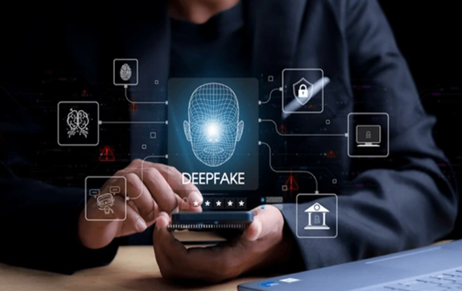
Artificial intelligence has now reached the cultural mainstream and is used as a tool for creating hyper-realistic human simulations. Among the most controversial applications of this is creating the synthetic audio-video content via machine learning techniques to imitate real persons, which is called deepfakes. Although these deepfakes could be very useful in sectors like cinema and education, their misapplication raises big issues surrounding identity, privacy, and exceptional reputation harm to the imitated person.
In the entertainment industry, where celebrities generally have complex relationships with fame and scandals. Their images, voices, and personal attributes become valuable to commerce; therefore, those are at constant risk of being misused. In recent months, the Indian courts have dealt with a series of such cases involving controversies arising from Karan Johar seeking an injunction against a deepfake video that falsely portray him, then Aishwarya Rai Bachchan and Abhishek Bachchan approaching the court with a petition against the unauthorised generation of morphed disturbing video misusing their persona where court have to intervene and stop the circulation of those video.
The cases and interventions from the courts highlight the need for explicit recognition of the personality rights and advancement towards the protection of the same from such deepfakes. The deepfakes now are not merely a minor misuse, they have emerged as part of the wider misinformation ecosystem and are recognised as one of the top ten greatest global risks by the World Economic Forum’s 2024 Global Risks Report.
The nature of the online deepfakes content is such that the more viral it becomes, the more difficult it will be to trace the origin and the more it intensifies the creator’s anonymity. Many countries have also recognised it as a greater threat and addressed it through their legislations, but the challenge is much larger in India, as it lacks the codified personality rights and legislative framework.
This article delves into the jurisprudence of personality rights and the challenges in governing AI deepfakes in various parts of the world and presents a comparative insight for India to assess the requirement of a necessary statutory framework for the protection of the masses and Celebrities.
UNDERSTANDING PERSONALITY RIGHTS
Personality Rights, also termed the right of publicity, has the legal meaning of one individual exerting control over the commercial use of his or her name, image, voice, etc. Unlike the wider right to privacy, which seeks to protect an individual from intrusion, personality rights recognise the economic value of a person’s image, name, likeness, or voice. Celebrities, whose professional worth may often depend upon a marketable persona, are thus protected from unauthorised exploitation.
The Indian system of laws, undifferentiated as they are, does not have any law specifically relating to personality or publicity rights until now, which means that the courts must evolve such laws through case law precedents.
- Rajagopal v. State of Tamil Nadu: The Hon’ble S.C. upheld the right to privacy under Article 21, thus laying a foundation on which subsequent claims of personality rights were based.[i]
ICC Development (International) Ltd. v. Arvee Enterprises: The Delhi High Court ruled that publicity rights are vested in individual persons and not in any corporation, thus emphasising the personal nature of these rights that cannot be alienated.[ii]
Titan Industries Ltd. v. Ramkumar: The Court enjoined a jeweller from using pictures of Amitabh Bachchan and Jaya Bachchan without their approval, featuring unauthorised usage of celebrities’ photographs as a violation of the right to publicity.[iii]
 Personality rights have often been subsumed by Indian courts under the rubric of privacy, especially post the Puttaswamy decision (2017), where privacy was conferred the status of a basic right. However, the courts have also acknowledged the influential powers of celebrity identity, creating a doctrinal dilemma as to whether personality rights are a form of privacy or intellectual property rights or both?
International doctrine reveals three alternative conceptions of personality rights. Privacy Model, based on dignity and autonomy (prevalent in Europe). Property Model, focusing on transferability and commercial exploitation 16 (dominant in the United States and United Kingdom). Hybrid Model, balancing dignity and economic value (increasingly visible in Indian judgments).[iv]
The absence of legislative regulation in India compels the court to decide such cases on the particularity of each case. The emergence of AI deepfakes has exposed the incapability of the judiciary to act on these issues by implicating privacy, dignity and economic harm.
AI DEEPFAKES: A LEGAL CHALLENGE
India is experiencing a rising concern of impersonation due to the boom in usage of deepfakes and real person-inspired AI-generated videos, audios, and images. The benefits from advances in technology are numerous, but regulating this sector is very challenging, and currently it is witnessing a rise in harmful content that impersonates celebrities in pornographies or in adverts for which they have not consented. The current legal knowledge and reasoning, though, provides prima facie protection, but while diving into its more technicalities, are not sufficient to address the existing gaps in the sector.
Deepfakes also intrude on privacy, especially by means of non-consensual sex content or defamatory images. Since privacy is now a fundamental right under Article 21 after Puttaswamy v. Union of India (2017), enforcement against deepfakes is obstructed by anonymity and trans-platform virality. Deepfakes are only one component of an overall misinformation ecosystem in which harms are not limited to pecuniary loss but include emotional distress as well as reputational ruin.[v]
Deepfakes also constitute false endorsements, tricking consumers into thinking that a celebrity endorsed a product or service. Such deception converges with trademark and passing off doctrines, but Indian law is uncertain about whether these doctrines fit deepfake endorsements precisely. Precedent exists through the Titan v. Ramkumar Jewellers (2012) case, but AI-generated fakes complicate the proof of authorship and liability.
India’s challenge in deepfake regulation and personality right protection is not an isolated one. Globally, various jurisdictions have taken different paths, from property-based models used in the United States to dignity-based ones in Europe and South Africa. These comparative insights point out both potential avenues and pitfalls for India to structure its own legislative response.
INTERNATIONAL JURISPRUDENCE AND COMPARATIVE INSIGHTS
In the U.S., personality rights developed mostly as publicity rights, a right based on property differing from privacy. U.S. courts recognised publicity as a separate legal interest after Haelan Laboratories v. Topps Chewing Gum (1953)[vi], enabling celebrities to control the commercial use of their identity. Midler v. Ford Motor Co.[vii] and then White v. Samsung Electronics[viii] are indeed landmark cases as they extend the protection to cover the wrongful personifications or imitations suggesting a celebrity’s personality.[ix]
The enactment of the ELVIS Act (2024) by Tennessee, covering the AI-generated digital replicas by extending publicity rights, alongside the amendment of the Civil Rights Law by New York as a redressal mechanism for digital impersonation, further the European model stresses privacy and dignity, not property.
Data protection as well as privacy laws often enforce personality rights. These laws provide enforcement for personality rights additionally. Consent that is needed for processing personal data is a requirement under the General Data Protection Regulation (GDPR)[x]. Images and biometric identifiers can serve as examples for personal data. Therefore, a violation may constitute deepfakes disseminated or created without consent. Dignity-based approach considers the forbidden use of one’s identity to be an affront to personal integrity because it does not merely misappropriate economic value for itself.[xi]
In addition to that, the EU’s AI Act (2023)[xii] imposes transparency obligations for synthetic media since it requires AI-generated content to be labelled in a clear way.
In South Africa, personality rights in relation to dignity, privacy and reputation are thought and established. Courts think of violations as invasions of inherent human dignity rather than treating identity as alienable property. The paradigm is well-positioned to block defamatory or degrading deepfakes but will be less adaptable for commercial endorsement disputes.
Comparative references highlight the need for India to shift to a robust statutory framework. Such a hybrid model can be most effective at once recognising commercial value in celebrity identity (as in the U.S.) and protecting dignity and privacy interests (as in the EU and South Africa). Conceptual clarity of the foundation is paramount, and in its absence, courts will continue to swing between privacy, IP, and tort doctrines, exposing deepfake victims to disparate remedies.
THE LEGAL LANDSCAPE AND JUDICIAL DEVELOPMENTS IN INDIA
Indian law, as compared to other laws, has not clearly codified a right to publicity or personality rights by legislation. Rather, courts have inferred from the available body of laws.Right to Privacy is one such paradigm that has been established by virtue of the landmark Puttaswamy judgment. It forms the constitutional basis for the protection of the private autonomy and dignity of individuals against unauthorised use.
The Indian Courts have also considered the IPR principles when any form of misrepresentation or deepfake came into dispute with commercial endorsements. The doctrine, such as passing off and infringement of trademarks, has set precedents through the landmark judgment of Arvee Enterprises and Titan Industries.
The tort law that prohibits the activity of defamation or misrepresentation, though it has lesser efficacy by virtue of its viral nature, can be called to look after the obstacles arising from deepfake materials.
Judicial Developments
In Amitabh Bachchan v. Rajat Nagi (2022)[xiii], the Delhi High Court granted an injunction in the form of a John Doe order against the use of his persona for abuse and safeguarded his personality rights by clearly recognising Bachchan’s right to control the use of his name, voice, and images for commerce. In the case of Karan Johar v. India Pride Advisory Pvt. Ltd (2024)[xiv], the Bombay High Court directed a takedown notice against a deepfake video of his fabricated AI impersonations, making false claims. Likewise, in the case of Aishwarya Rai Bachchan v. Aishwaryaworld.com & Ors (2025)[xv], the court proceeded against the dissemination of morphed pornographic deepfakes and illicit sales of merchandising, underscoring the necessity for assisted exploitation to be addressed. Here, the court provided an ex parte ad interim injunction, directing a takedown of the offending URLs and cessation from selling illicit articles.
On the surface, such judicial pronouncements appear liberal, yet they are clearly struggling to counter the violation of personality rights being incurred by virtue of deepfakes’ proliferation, thus reflecting a considerable gap in a comprehensive statutory regime.
THE MIRAGE OF FAME: POLICY GAPS AND ROAD AHEAD
The threat posed by deepfakes manifests both doctrinal reservations and systemically missing policy coverage. Despite courts intervening with interim directions, the viability for the long haul rests on legislative clarity, regulatory agencies, and business cooperation.
In contrast to the United States, where publicity rights are viewed as a form of property interests, or the EU, where the approaches under the umbrella of dignity allow for extremely strong privacy protection, India has no codified personality rights regime. Deepfakes, by definition, are transnational, anonymous, and fast-viral.
The Information Technology Act, 2000[xvi], and draft Digital India Act deal with intermediary liability but do not directly control AI-created impersonations. Platforms tend to respond belatedly, taking down content only after a complaint, and not actively identifying and marking deepfakes. In the absence of statutory requirements of transparency and watermarking, deepfakes will be embedded in the broader misinformation ecosystem.[xvii]
One of the central policy challenges is to balance freedom of expression against the requirement to restrict harmful exploitation. While satire, parody, and artistic use of deepfakes merit room, harmful or manipulative uses need to be strictly forbidden. Comparative experience indicates that a dual approach, commercial protection (like in the U.S.), alongside dignity-based protection (like in the EU), can offer a balanced response for India.
Proposed Reforms for India
The mirage of fame, where one’s own identity becomes a weapon against oneself, underscores the urgency of reform. A forward-looking statutory framework would ensure that both public figures and ordinary citizens are protected from unauthorised digital replicas of their likeness.
Statutory Recognition of Personality Rights: Codify the right of publicity or personality as a distinct legal right, protecting both commercial and dignitary interests.
AI-Specific Regulation: Mandate disclosure and watermarking of AI-generated content, coupled with platform accountability for proactive detection and takedown.
Civil and Criminal Remedies: Introduce swift remedies for non-consensual intimate deepfakes, including both damages and criminal penalties.
Cross-Border Cooperation: As deepfakes are generally hosted or distributed from outside India, harmonisation with international regimes (EU AI Act, U.S. state laws) will be necessary.
Awareness and Industry Standards: Prompt media platforms, advertising companies, and AI developers to implement ethical codes of practice for synthetic media.
CONCLUSION
AI deepfakes pose a critical threat to personality rights by creating confusion between reality and fabrication, exposing the critical, unaddressed vulnerabilities in the Legal framework of our country. The Indian courts are trying their best to fill the gaps by addressing every possible case, but the lack of a structured legislative framework is exposing the victims to risk. The Indian courts are trying their best to fill the gaps by addressing every possible case, but the lack of a structured legislative framework is exposing the victims to risk.
It now becomes the responsibility of the legislature to come up with something that can act as a preventive measure and can create an atmosphere that safeguards autonomy, dignity and commercial worth in the era of deepfakes by taking the lesson from the jurisprudence of other countries
The mirage of fame must be safeguarded and cannot be left to be a weapon against those whose influential characters and works shape India’s cultural and economic fabric, and to protect it, India must transform from crisis-driven litigation to systematic proactive protection that must not be only a legal imperative but also a morally sound.
Author: Diptanshu Kashyap, in case of any queries please contact/write back to us via email to [email protected] or at IIPRD.
[i] R. Rajagopal v. State of Tamil Nadu, (1994) 6 SCC 632.
[ii] ICC Development (International) Ltd. v. Arvee Enterprises, 2003 SCC OnLine Del 763.
[iii] Titan Industries Ltd. v. Ramkumar Jewellers, 2012 SCC OnLine Del 2382.
[iv] A. Luthra, Publicity Rights: Right to Publicity or Right to Personality (2019).
[v] R. Vig, Regulating Deepfakes: Emerging Legal Challenges (2024).
[vi] Haelan Labs., Inc. v. Topps Chewing Gum, Inc., 202 F.2d 866 (2d Cir. 1953).
[vii] Midler v. Ford Motor Co., 849 F.2d 460 (9th Cir. 1988).
[viii] White v. Samsung Elecs. Am., Inc., 971 F.2d 1395 (9th Cir. 1992).
[ix] M. Murray, Deceptive Exploitation: Deepfakes, the Rights of Publicity and Privacy, and Trademark Law, 65 IDEA 124 (2025).
[x] Regulation (EU) 2016/679 of the European Parliament and of the Council of 27 April 2016 (General Data Protection Regulation).
[xi] J. Neethling, Personality Rights: A Comparative Overview (2005).
[xii] European Union, Artificial Intelligence Act, 2023.
[xiii] Amitabh Bachchan v. Rajat Nagi, CS (Comm) 819/2022, Delhi High Court.
[xiv] Karan Johar v. India Pride Advisory Pvt. Ltd, COMM IPR SUIT (L) NO.17863 OF 2024.
[xv] Aishwarya Rai Bachchan v. Aishwaryaworld.Com & Ors, CS(COMM) 956/2025, Delhi High Court.
[xvi] Information Technology Act, No. 21 of 2000, (2000).
[xvii] S. Sharma & R. Singh, AI-Driven Voice Cloning Technology: A Legal Analysis of Personality, Publicity, and Performer’s Rights in India, 3 NLU Student L.J. 52 (2023).
Related Posts