
Introduction: Why Intellectual Property Still Matters Ideas can have a greater economic value than tangible…
DNA as Intellectual Property: Can Your Genes Be Owned?
Introduction
The United States Supreme Court ruled unanimously in June 2013 in the case of Association for Molecular Pathology v. Myriad Genetics, Inc. that naturally occurring DNA sequences cannot be patented. This judgement was celebrated as a triumph for patients, scientists, and healthcare professionals who had been unable to afford BRCA genetic testing because a monopoly existed on such services. However, the central issue brought out in the Myriad case whether your genes can be patented is far from being resolved, especially in countries like India where the legal framework is constantly developing.
The fast-paced development of genomics and biotechnology in the modern world means that the IP and human genome nexus has become the defining legal issue of the twenty-first century. Businesses spend considerable resources on discovering, decoding, and manipulating genetic codes. The patent system, which encourages investments in innovations, rewards individuals who discover something new and unique by granting them monopoly rights over their inventions. However, genetic material stands out from other natural elements and products in the eyes of the law since it is both a natural creation and a tool used for medical purposes.
The current blog is an analysis of the patentability of genes according to Indian laws, a comparative look at the stand that has been adopted by other jurisdictions such as the US and European law, an examination of the ethical aspects associated with patenting human genes, and the contextualization of developments such as the recent decision of the Delhi High Court on biotechnology patents and India’s Access and Benefit Sharing Regulations, 2025 in the above jurisprudential context. The blog will be drawing extensively on previous work done by the firm on pharmaceutical IP, especially on the interface between trademarks and public health.
What is Gene Patenting?
A gene patent offers its owner exclusive rights with regard to a certain DNA sequence, its isolated state, or methods used with the same. For instance, one implication of such a patent would mean that another laboratory or an individual researching the DNA will not be allowed access to the sequence unless authorized by the patentee. Gene patenting became popular at the end of the twentieth century when researchers gained the ability to manipulate genes using recombinant DNA techniques, thus linking them with particular ailments or body functions.
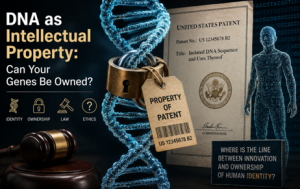 In general terms, gene patenting covers the following types of patents: (i) naturally occurring sequences in the isolated state; (ii) complementary DNA or cDNA, an artificial creation based on the coding regions of a particular gene; and (iii) methods using sequences in the process of diagnostics, therapy, or research purposes. Each type has different implications under different legal regimes.
In relation to biotechnological inventions, the landmark case is Diamond v. Chakrabarty, [1]decided by the US Supreme Court in 1980, in which the Court ruled that an artificially created living organism in this case, a genetically engineered bacterium discovered by a scientist from General Electric was patentable because the basic rule in patent law established that anything man-made was patentable, and hence anything under the sun made by man was patentable.
Legal Provisions in India
The legal position in relation to the patentability of genes in India is guided by the following laws Patents Act, 1970 (amended), Indian Biotechnology Guidelines, 2013, and Manual of Patent Office Practice and Procedure.
Statutory Exceptions under the Patents Act, 1970
There are two sections of the Patents Act, 1970 that are highly relevant in this context. Section 3(c) prohibits patents for inventions which include the mere discovery of any scientific principle or abstract theories, as well as for “the mere discovery of any living thing or non-living substance occurring in nature.” This provision has always been strictly interpreted as excluding naturally occurring genes from being patented. According to this section, isolating a gene that occurs naturally in the human body does not qualify as an invention.
In addition, Section 3(j) also excludes “plants and animals in whole or any part thereof other than microorganisms.”[2] Thus, this section explicitly prevents granting patents to genetic material which is a part of either plants or animals. On the other hand, microorganisms such as genetically modified bacteria and viruses cannot be excluded through Section 3(j); thus, microorganisms can become patentable if they fulfil the conditions of being novel, having an inventive step, and being industrially applicable according to Section 2(1)(j) and Section 2(1)(ja) of the Act.
According to the 2013 Indian Biotechnology Guidelines, a recombinant gene having an inventive step and industrial applicability will be patentable, and no longer is it necessary that it must involve “substantial human intervention” like the old guideline stated in its 2005 draft Manual.[3] It should be remembered that unknown gene functions and those lacking in utility cannot be patented.
The TRIPS Obligation
India is a member of the World Trade Organization and, therefore, a signatory of the Agreement on Trade-Related Aspects of Intellectual Property Rights (TRIPS). Article-27 of TRIPS provides that member countries must grant patent protection for inventions in all areas of technology, including biotechnology.[4] But according to Article 27.3(b), member countries may refuse patent protection for plants and animals, as well as essential biological processes used for making plants and animals, but they should ensure protection of plant varieties by patent or some sui generis legislation. This criterion has been met in India via the Protection of Plant Varieties and Farmers’ Rights Act, 2001.
Nevertheless, legal ambiguity arises when interpreting India’s exclusions from statutory provisions against its international obligations under TRIPS in respect of genetically engineered seeds and gene sequences present within agricultural organisms.
Key Judicial Decisions
Monsanto Technology LLC v. Nuziveedu Seeds Ltd. (2019)
The most prominent Indian case concerning the patenting of genes is the litigation surrounding Bt Cotton between Monsanto and Indian seed producers. In Monsanto Technology LLC v. Nuziveedu Seeds Ltd.,[5] The Division Bench of the Delhi High Court ruled that “genetically modified plants, genetically modified seeds and gene sequences that provide genetic traits to plants are not patentable subject matter in India.” The court’s reasoning was that such subject matter was excluded by Section 3(j) of the Patents Act.
Later, the Supreme Court of India quashed the decision of the Division Bench, not because it found fault with the reasoning of the lower court, but because the facts needed to be examined more carefully. Crucially, the Supreme Court specifically abstained from rendering an opinion regarding whether isolated DNA and cDNA were patentable in India.[6] Hence, the silence of the judiciary in this respect has created uncertainty regarding the legal position of India on the issue of gene patents.
Patenting of Japanese Encephalitis Virus cDNA
Unlike the stringent attitude towards genomic DNA, the Indian Patent Office issued a patent for cDNA related to Japanese Encephalitis Virus on the basis that it was “new and novel,” as provided for under Section 2 of the Patents Act[7]. This patent implied that artificially synthesized cDNA, rather than the natural genomic DNA, could, under certain conditions, be considered patentable material in India, a stance similar to the one adopted by the United States after Myriad.
University of California v. Controller of Patents Delhi High Court (February 2025)
In the latest biotech patent decision from India, the Delhi High Court in its judgement delivered on 21 February 2025 found the refusal by the Patent Office of an application for the grant of patent submitted by the University of California for a genetically modified bacterium of Salmonella type to be used as a vaccine for cattle and sheep to be valid[8]. The reasons for rejection by the Controller were two: one, that the genetic modification of the microbe rendered it a living substance of nature under Section 3(c); and two, that the requirement under Section 10 of the Act regarding enabling disclosure and deposit of samples was not fulfilled by the applicant.
Both reasons were endorsed by the Court. While considering the Section 3(c) objection, the Court noted that while it was true that there was human intervention in modifying the bacterium by creating a loss of function mutation, it could still not be said to be anything other than a living substance of nature. This decision was criticised by observers because it did not lay down any criteria to differentiate between genetically modified organisms (which might be patentable) and naturally existing living substances (which were not)., particularly as the courts have yet to provide a definitive framework for evaluating the extent of human intervention required to bring a living organism outside the bar under Section 3(c).
The US Position: Association for Molecular Pathology v. Myriad Genetics (2013) and Its Continuing Relevance
Although this is not a decision of Indian origin, the judgment of the US Supreme Court in the case of Myriad Genetics[9] will always be considered a landmark precedent for discussions around the world regarding human gene patents. In Myriad Genetics, Myriad Genetics received patents on the sequences of the BRCA1 and BRCA2 genes, the mutation of which increases the likelihood of breast and ovarian cancer by several orders of magnitude. Under the terms of its patents, Myriad Genetics had the monopoly of conducting all tests on the BRCA1 and BRCA2 genes in the US. Therefore, the company could demand high prices that were inaccessible to patients and did not allow independent testing.
The US Supreme Court, in a unanimous opinion prepared by Justice Thomas, ruled that isolated DNA sequences derived from the human body are products of nature since their information content is no different from natural sequences. Thus, genomic DNA cannot be patented. Nevertheless, the Supreme Court noted that unlike genomic DNA, cDNA is not a naturally existing substance since it can be created through reverse transcription of messenger RNA. It is an important case for Indian law because, traditionally, the Indian Patent Office has referred to cases from the United States in considering biotechnology applications, and the Myriad approach to differentiate between natural and artificial sequences is easily applicable within the context of Section 3(c).
Biopiracy, Benefit Sharing, and India’s ABS Regulations, 2025
The issue of ownership of the genetic material goes beyond patents as the bigger issue here is biopiracy, where the genetic resources of developing countries rich in biodiversity are taken without their permission and sharing benefits. India being one of the mega diverse countries has always been a target for biopiracy.
International governance of access to genetic resources is the Nagoya Protocol on Access to Genetic Resources and the Fair and Equitable Sharing of Benefits Arising from Their Utilization, which was endorsed under the Convention on Biological Diversity in 2010. With regards to this, India acceded to the protocol in 2011 and ratified the agreement in 2012. The ABS laws in India are regulated by the Biological Diversity Act 2002, administered by the National Biodiversity Authority (NBA).
However, recently, India enacted the Biological Diversity (Access and Benefit Sharing) Regulations, 2025, in addition to the Biological Diversity Rules, 2024, to update the country’s ABS legislative framework. Under this law, any patent application in India, involving biological material derived from India, must disclose their origin, as well as seeking the prior informed consent of the NBA. There are guidelines for benefit-sharing within the ABS Regulations, 2025. There are guidelines for PIC, MAT, and reporting requirements within the regulations.
Implications for IP professionals in relation to the above regime cannot be ignored. For instance, a patent application that is not compliant with the ABS regime provisions in regard to gene sequences or biological materials taken from the biodiversity of India can be challenged or invalidated. As shown in the ABS national report submitted by India at the CBD in February 2026, there were a total of 12,830 ABS regime approvals awarded in India from 2017 to 2025. Among the total number of approvals mentioned above, 5,913 were granted by the NBA in regard to IP rights applications.
Ethical and Policy Dimensions
Ethical issues involved with gene patents are intricate and cannot be reduced to questions concerning patents only. In essence, one can say that these arguments have something to do with the fact of the genome of all people being privately owned. There is more than one reason for taking these issues into account.
First of all, there is the issue of the possibility of restricting access to novel diagnostic or treatment procedures. As has been revealed in the Myriad case, a patent for a particular gene would mean that only this company would be able to conduct research based on the genetic sequence and create drugs based on it. This means that no competitors will be able to produce something similar.
Secondly, there is the problem of having access to genomic medicines, particularly for the countries of the Third World. The problem is that patents for essential genes associated with diseases would belong to companies of other countries, thus making Indians unable to get access to the diagnostics procedures.
Thirdly, extensive patents for genes might hinder the freedom of dissemination of information that is characteristic of open science. First and foremost, it should be noted that the majority of important gene discoveries are made through publicly funded scientific researches, and thus the fact that extensive patents provide exclusivity on these genes leads to privatization of publicly-funded scientific data.
Fourthly, there is the problem related to the issue of informed consent. Specifically, the fact that genetic material of patients can be collected during their treatment, identified and patented raises the question of whether the patient gave his or her permission for that to happen. While no law allows property interests in the biological samples taken, ethical concerns compel people to introduce informed consent requirements for gene patents.
Conclusion
The answer to whether genes are intellectual property cannot simply be yes or no. However, from the point of view of India, because their decision regarding gene sequences as not being eligible for patents in accordance with Section 3(c) of the Indian Patents Act is fairly well-balanced, laboratory-designed DNA molecules and microbes which satisfy the criteria of getting patented might be patented. The problem is that even in the case of Monsanto, where both courts failed to answer the question of patenting genes, the question remained unanswered.
From the international point of view, the Myriad Genetics ruling gives ground for answering the question of whether there is any substantial difference between the object in question and what exists in nature. The only difference between this situation and the current situation in India is that while mere isolation does not make things patentable, the modified gene sequence with all its new properties will become patentable if the question is raised.
It is apparent from the enactment of the ABS Regulations, 2025 and the submission of India’s first national report under the Nagoya Protocol to the CBD in February 2026 that there is a growing realization amongst institutions about how access to genetic resources and benefit sharing in respect thereof ought not be governed only by the rules of intellectual property but that it must be fair and consensual. In creating an IP regime, it is imperative that innovations are incentivized without turning the human genome into private property.
Author: Suzain Khan, in case of any queries please contact/write back to us via email to [email protected] or at IIPRD.
[1] Diamond v. Chakrabarty, 447 U.S. 303 (1980).
[2] The Patents Act, No. 39 of 1970, § 3(j), India Code (as amended).
[3] Indian Biotechnology Guidelines, 2013, issued by the Office of the Controller General of Patents, Designs and Trade Marks, Ministry of Commerce and Industry, Government of India.
[4] Agreement on Trade-Related Aspects of Intellectual Property Rights, Apr. 15, 1994, Marrakesh Agreement Establishing the World Trade Organization, Annex 1C, art. 27, 1869 U.N.T.S. 299 [hereinafter TRIPS Agreement].
[5] Monsanto Technology LLC v. Nuziveedu Seeds Ltd., (2019) 3 SCC 381 (India) (the Division Bench of the Delhi High Court’s ruling that gene sequences providing genetic traits to plants are not patentable subject matter was subsequently set aside by the Supreme Court for re-examination: Monsanto Technology LLC v. Nuziveedu Seeds Ltd., Civil Appeal Nos. 1148–1149/2019 (Supreme Court of India), order dated 8 January 2019).
[6] Id. (Supreme Court order noting that the court refrained from making conclusive observations regarding the patentability of isolated DNA and cDNA in India).
[7] Patenting of Genetically Stable JEV cDNA based on Japanese Encephalitis Viruses, Indian Patent No. [granted], discussed in The Law Tree, Gene Patenting in India, https://thelawtree.akmllp.com/insights/gene-patenting-in-india/ (last visited Apr. 2026).
[8] University of California v. Controller of Patents, Designs and Trade Marks, W.P. (C) [Patent] (Delhi High Court, Feb. 21, 2025), concerning Patent Application No. 201717005699, discussed in Prashant Reddy T, Delhi High Court Stirs the Pot for Biotech Patent Applicants in India, SpicyIP (Feb. 26, 2025), https://spicyip.com/2025/02/delhi-high-court-stirs-the-pot-for-biotech-patent-applicants-in-india.html.
[9] Ass’n for Molecular Pathology v. Myriad Genetics, Inc., 569 U.S. 576 (2013).
Related Posts