

The Compulsory Licensing Scheme Proposed by DPIIT – Why Debated?
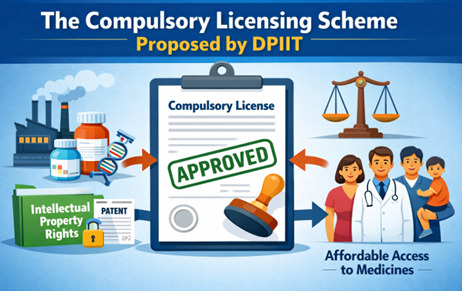
Introduction India’s Department for Promotion of Industry and Internal Trade recently floated a working paper that has stirred up a storm in both tech and creative circles. The idea centers on creating a single nationwide authorisation for AI companies to use copyrighted materials in training their models, paired with a royalty system to compensate creators. […]
Patent Rights and Their Impact on Pharmaceutical Markets

Introduction The recent decision of the National Company Law Appellate Tribunal (NCLAT) in “Swapan Dey v Competition Commission of India & Anr.[1]” brings back the focus on the interplay between patent rights, competition law, and public health in the pharmaceutical sector. While the case has largely been viewed as a jurisdictional determination concerning the respective […]
Compulsory licensing: a mechanism in balancing the rights to patents and the need to protect health
The topic of Compulsory licensing (CL) is right in the centre of a huge controversy of intellectual property and the fundamental right to health. As nations attempt to increase pharma innovations, and at the same time to make life saving drugs affordable, CL emerges as the most appropriate legal solution. It is where governments permit […]
Compulsory Licensing in Entertainment: A Constitutional and IP Law Reassessment of the Balance Between Innovation and Access

Introduction: Redefining Cultural Access in the Age of Platformization In the present day, platform-driven entertainment systems, the delivery of cultural products, whether it is music, cinema, or digital media, is not interceded by state organisations but instead, by privately owned intermediaries. The ownership of huge IP portfolios by streaming platforms, digital broadcasters, and global tech […]
Compulsory Licensing in India: A Legal Framework for Balancing Patent Rights and Public Needs

The patent law domain features compulsory licenses at their core to bridge invention promotion with essential public access to vital products through technology. Under certain public welfare situations the exclusive rights granted through patents become subject to being overridden. The solution becomes available through compulsory licensing at this stage. The Indian government maintains a comprehensive […]
From Pharmacy of The World to Patent Prison: India’s Shift Under Trips
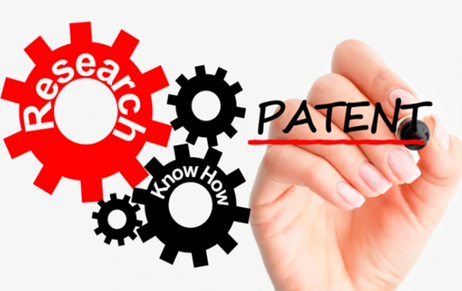
Patented, which means giving an exclusive right to the patentee to protect their invention from a third person, who cannot use the invention or sell it without permission from the rightful patentee, with a few exceptions. Getting patients right does not mean a green light to sell. According to the TRIPS (Trade-Related Aspects of Intellectual […]
How Bayer Lost Its Monopoly: The Story Behind India’s First Compulsory License
The legal dispute between Bayer Corporation and the Union of India, along with other parties, centered on India’s first compulsory license for the anticancer drug Sorafenib (marketed as Nexavar). The Intellectual Property Appellate Board (IPAB) thus upheld the license and concluded Bayer had failed to ensure public access to the drug at an affordable price. […]
Compulsory Licencing

Introduction Compulsory licence is a licence issued by the government to an applicant for making, using, selling a patented product or making use of a patented process without consent of the patentee. Provisions related to compulsory licensing are outlined in Chapter 16 of the Patents Act, 1970. Application of compulsory licencing Section 84 of the […]
Balancing Innovation & Rights: A Copyright Policy Proposal for Ai Training In India

PROBLEM STATEMENT The burgeoning Indian AI sector faces a critical test in reconciling the unparalleled technological advancements promised by large language models with the fundamental rights of copyright holders. AI systems may use copyrighted data to train their algorithms and produce original works. Unfettered access to online data, while fuelling innovation and economic growth, risks […]
Pharmaceutical Patents In India – Problem Of Public Access To Health

INTRODUCTION Intellectual property laws are becoming more prevailing day- by- day, most often used from of intellectual property are patents. The major challenged faced by patent law is to create a balance between access and innovation. Pharmaceutical patents are a significant area of contention between developed and developing nations.The pharmaceutical industry asserts its right to […]